
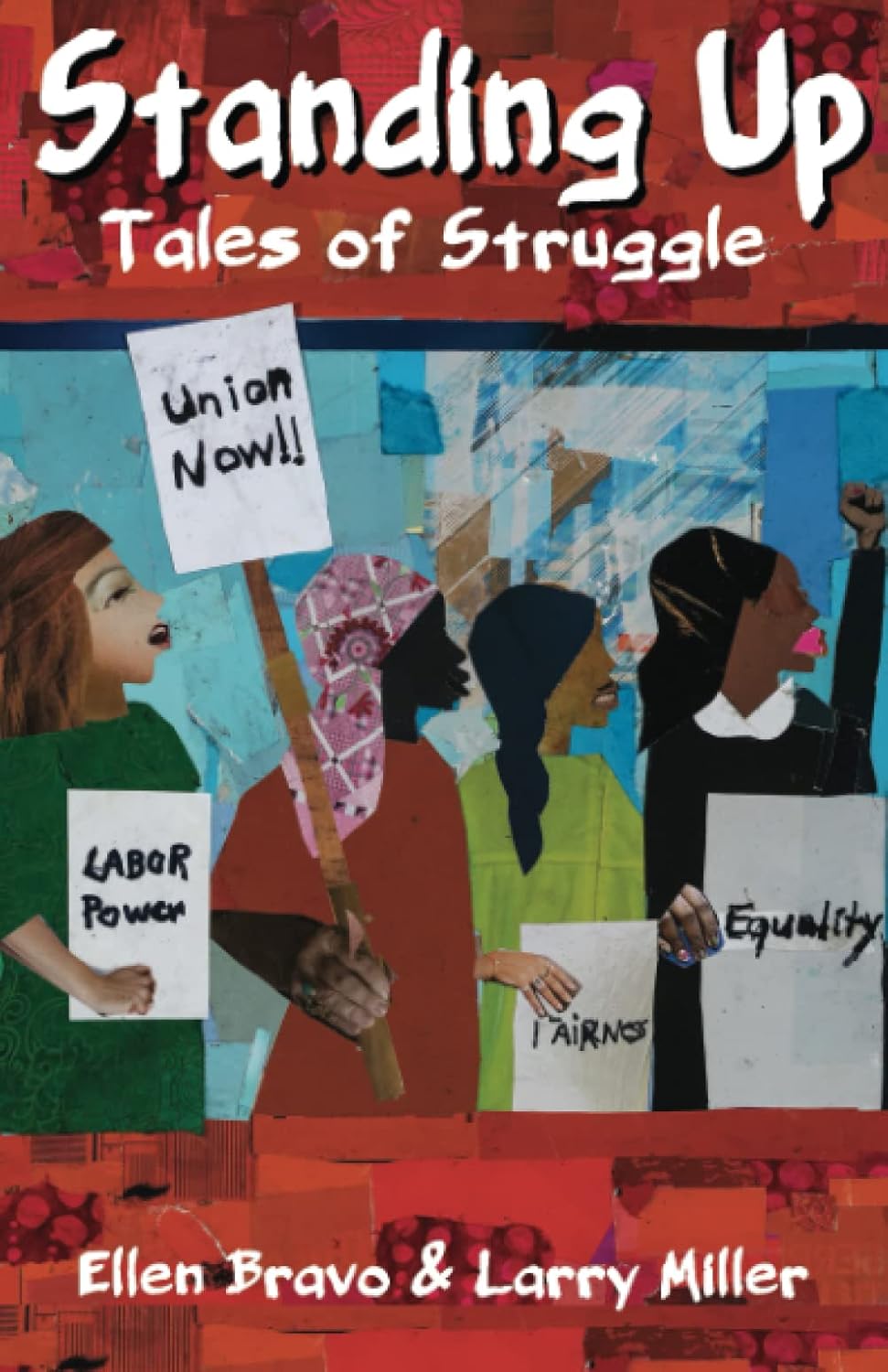
As they stand up, slow down, form unions, leave an abusive relationship or just stir up good trouble, the characters in this multi-generation novel entertain and enlighten, make us laugh and rage, and encourage us to love deeply, that we may continue the fight for justice.
Get your reading group discussion guide here.
Testimonials and Reviews
“So much fiction is about escape and fantasy, but these powerful Tales of Struggle will enrich our real and daily lives.” ─ Gloria Steinem “What a wonderful story of class, class struggle and regular people. The story is about struggle and change, but also about joy and humor. Great work! ─ Bill Fletcher, Jr., author of Solidarity Divided “Great storytelling about standing up to injustice, filled with hope and powered by love and human interdependence, where we tell each other, “Yes, you can,” and tell our oppressors, “No, you won’t.” – Ai-jen Poo, Director of the National Domestic Workers Alliance
“Into this small novel are packed shocking, terrifying, inspiring and deeply felt lives of the unsung and marginally employed. Ellen Bravo and Larry Miller have drawn on a lifetime of social activism to tell the stories of the brothers and sisters who do the unseen work of the world.
– Jacquelyn Mitchard, author of The Deep End of the Ocean
Standing Up is a love story, a tale of parenting, friendship and solidarity — and a wonderful depiction of stepping into power. Bravo and Miller spotlight the moments when people realize oppression isn’t inevitable and is stoppable if we act together. How refreshing to see white workers grappling with the need to fight racism, men learning to be feminists, those who’ve never known justice organizing to take on the bosses and the bullies. This novel will make you laugh, bring tears to your eyes, and above all, give you hope.
Cong. Pramila Jayapal, chair, Congressional Progressive Caucus
I felt as if Norma Rae or Studs Terkel had written a novel. It’s teeming with life, an entertaining and engaging read about the day-to-day struggles of working Americans, especially women workers, and how people fight to create better lives for themselves and their families—and often have [mischievous] fun in that fight. In an enjoyable, readable way, it provides a roadmap for building a better and fairer America.
Steven Greenhouse, author of Beaten Down, Worked Up: The Past, Present, and Future of American Labor
What a wonderful story of class, class struggle and regular people. Bravo and Miller have written what feels like a merged memoir and novel. Covering decades, the story is about struggle and change, but also about joy and humor.
– Bill Fletcher, Jr., author of The Man Who Fell Out of the Sky and Solidarity Divided
From the first page, Ellen Bravo and Larry Miller organized us into readers who couldn’t put Standing Up down! Worker actions and victories are celebrated equally with truth and determination.
– Sue Doro, Editor/Publisher Pride and a Paycheck Magazine
Great storytelling about standing up to injustice, filled with hope and powered by love and human interdependence. We see the anatomy of stand-ups: courage bolstered by support, where we tell each other, “Yes, you can,” and tell our oppressors, “No, you won’t.”
– Ai-jen Poo, author of Aging with Dignity, director of National Domestic Workers Association and Caring Across Generations
So much fiction is about escape and fantasy, but these powerful tales of struggle will enrich our real and daily lives.
– Gloria Steinem, activist and author
Lyrical snapshots of resistance and solidarity at the workplace—hospitals, factories, banks, schools. Told with warmth and humility, these poignant stories provide roadmaps for readers fighting racism, sexism, and homophobia at their jobsite or in their home. A must read for anyone serious about working for change in the world and for anyone who loves a great story. It will be a wonderful addition to the curriculum for teachers in high school and college classes.
– Linda Christensen, author of Reading, Writing and Rising Up
The characters in this book face injustice but together find ways to fight back with wit, rage, heart—and a good dose of laughter. If you’ve ever worked a low-wage job, you’ll love the creative ways Bravo and Miller’s characters take on the bullies, bosses, and bureaucrats who stand between working people and the respect we deserve.
– Jennifer Morales, author of Meet Me Halfway
Standing Up describes the small indignities and larger practices that play havoc with workers’ lives. It captures the process of convincing oneself and others to take a risk and speak up and the personal epiphanies that can result. It’s like a cookbook for activists with details of inspired campaigns borrowed from the records of two senior organizers happy to share.
– Jane LaTour, author of Sisters in the Brotherhoods: Working Women Organizing for Equality in New York City
Standing Up tells the stories of organizers in their true state, bypassing stereotypes in favor of reality. These are people who play, love, marry, raise kids, enjoy food, negotiate sex, and care for elders. They also change little corners of the world with their friends. That’s the essence of organizing — everyday people making change together.
Rinku Sen, author of Stir It Up
A gem of a playbook that centers the voices of workers challenging all levels of inequity, privilege and power. I invite union staff, union members, organizers and all students of labor to take this novel journey.
– K. C. Wagner, Co-Chair, Equity at Work, The Worker Institute at Cornell
Ellen Bravo and Larry Miller bring to life how ordinary people find the strength to stand up to fight back and build the community they need to sustain them. The book is funny, powerful and inspiring.
– Karen Nussbaum, former director of 9to5 and of Working America
This is the best book for labor educators who want to teach organizers and union supporters because it’s from the bottom up. Most organizing books tell the story from the top down. Standing Up shows that community-building is organizing. They always have fun. They always bring food.
Ruth Needleman, Professor Emerita of Labor Studies, Indiana University and author of Black Freedom Fighters in Steel
Standing Up tells an inspiring story of everyday people organizing for racial, gender and economic justice at work and in their communities. I admit that the last chapter, “The Roar of the Elders,” really grabbed me, as it explored how to bring in and support a new generation of leaders while continuing to contribute as we age – in all its complexity.
Marilyn Sneiderman, Professor and Director of Center for Innovation in Worker Organization, Rutgers University School of Management and Labor Relations
Omnium Gatherum Quarterly
I learned critical skills at the Community of Writers two decades ago. So proud that they published an excerpt from Standing Up, the chapter titled “Magic Monday,” in their quarterly bulletin.
New York Labor History
Jane LaTour wrote this extensive review of Standing Up in the NY Labor History Association review. Honored to have her perceptive take on the ways our novel highlights “the daily indignities, and the dangers inherent in routinized sloppy procedures that are just part of the day’s work,…and the proces in different settings, when people consciously act to fathom and then dismantle the obstacles they encounter, piece by piece.”
Wisconsin Examiner
Terry Falk reviewed the book in the Wisconsin Examiner. His key takeaway: “storytelling here is the main attraction.”
Activist Explorer
Juliana Barnet writes a newsletter about fiction featuring activists. She wrote this amazing piece. I especially loved the conclusion: “This book gives a picture of some of the many, and often unrecorded, grassroots victories, which consist not only of achieving better material conditions for work or school, but also the monumental changes that take place inside people, as individuals and as a group. As Bravo says, “We want to show that moment—such a joy to watch—when people get a sense they don’t have to put up with this shit anymore… [It] isn’t inevitable, somebody’s doing it. We can change that, and ‘we’ means me, too.”